 United Kingdom, GBP
 United States, USD
 Canada, CAD
 Australia, AUD
 New Zealand, NZD
 European Union, EUR
 France, EUR
 Switzerland, CHF
 Germany, EUR
How to Squirt
(or Come Trying)

Medically reviewed by Dr. Janet Brito on 04 Mar 2026
In this guide: What is squirting? | Can anyone squirt? | How to squirt | Squirt-friendly sex positions | Squirting myths
For some, squirting is a totally normal part of sex. For others, it’s a little messy and embarrassing! Either way it’s rarely like a porno, where a huge jet of liquid gushes out in a wild, orgasmic climax. Sorry folks!
That said, learning how to squirt can be euphoric, surprising, sensual, and even silly. It’ll take a little patience and research, but you’ll definitely have fun trying. So, whether you’re trying to squirt for the first time or want to try squirting during sex instead of just solo play, we’ve got an ocean of squirting info for you to soak up.
Only got time for a quickie?
Squirting contains multitudes, so it’s ok if you don’t want to dive in all at once. In the meantime, here are some quick n’ wet facts about this unique sexual response:
- Squirting is completely normal, even if it takes you by surprise! It’s also completely normal if you’re not able to squirt or can only squirt once in a while or when you really put your mind to it.
- Squirt comes from the bladder and is released by the urethra, which is why it’s often confused for pee. But the fluid looks (and smells and tastes) very different to urine and is produced by glands that assist with sexual arousal.
- If you’ve never squirted before, the process of learning may take time, especially if you’re not as experienced with G-spot stimulation. Starting with solo play may be easier, because once you know how to make yourself squirt, you can help your partner master it too.
- Orgasming and squirting are not the same thing, but they can happen at the same time. Squirting feels unique and can be intense and pleasurable, but don’t expect it to mirror your experience of orgasm.
Squirting is a sexual response that some people with vulvas experience. Basically, it’s when a noticeable amount of clear liquid is expelled from the urethra during sex. It’s often conflated with female ejaculation, which is similar but not the same, though you can experience both simultaneously. It’s also not urine, though it does originate in the same place.
Squirting is undoubtedly real, but it can look and feel very different for everyone. Yep, you can squirt and come, you can come without squirting, and you can squirt without coming. Similarly, squirt can come out in a trickle or a gush. That may sound like a lot to process, but all this variety is what makes squirting such a unique, surprising, overwhelming, and wonderful part of your sex life.
Toys to help you try squirting


Only people with female anatomy can squirt, although not every squirter identifies as a woman and not every woman has experienced squirting! Squirt fluid is partially produced by the Skene’s glands (also known as the “female prostate”), which are located either side of the urethra (where you pee from) and help lubricate the vagina during arousal.
According to one study, 40% of adult women in the US have squirted in their lifetime. The study also found that 75% of women who squirted “used specific techniques vs squirting spontaneously”. This suggests that there are likely people out there with who can squirt but haven’t discovered the right method yet. So, if you’ve got female anatomy and you like the idea of squirting, you might be able to learn how to do it.
Set up your space and yourself
Soaking yourself and even your partner might be sexy and exciting, but you’ll save yourself some cleanup (and some anxiety) if you protect your mattress and bed sheets. Try placing a towel or a luxuriously soft waterproof throw on your bed before you play.
But don’t just prep your space; prep yourself! Hydrate, but don’t overdo it — you don't want to suddenly have to pee instead of squirt! Another way to prevent this is by making sure your bladder is empty before the fun begins.
Get relaxed and aroused
Be patient; you may not squirt the first time you try, or the second time, or even the fifth. Lovehoney Forums user RosyCheek says for them, it “only happens when using a g-spot vibrator and I am completely relaxed.” Some people, including squirt porn performers, also say it’s easier to squirt after they’ve already orgasmed at least once (any type of orgasm will do, not just penetrative), so don’t assume you’ll soak your sheets at the very start of your solo playtime.
Spend some time feeling good and relaxed, then get ready to enter the splash zone. It may be frustrating to find that squirting doesn’t come naturally to you. Take that pressure off yourself! Expecting immediate waterworks will only make achieving your squirting goals harder.
Need some self-pleasure tips before you begin? Check out our guide: How to Masturbate for Women
Try finding your G-spot with your fingers
Keep things simple to start. The most reliable way to squirt involves putting consistent pressure on the G-spot. So, unless you and your partner have your penetration angles nailed, this might be easier to do with your fingers at first.
If you don’t know how to find your G-spot, know that it’s usually about 2-3 inches inside you on the front vaginal wall. It may feel firm or spongey and ridged. When you can feel it, press towards it, curling your fingers in a rhythmic fashion rather than thrusting in and out. Explore what feels good and gets you wet.
Lovehoney forum user bexiswetnow breaks it down from there: “Start gently and then increase pressure. The G-spot will start to change in the way it feels; it goes from hard to soft and spongey. That's when you start to feel the urge to pee. Go with it.”
Go with the flow (you’re not going to pee yourself)
Squirting and peeing aren’t the same thing, but you may feel like you have to urinate right before you squirt. A study found that people who had completely empty bladders before sex experienced “noticeable bladder filling” right before they squirted. Afterwards, everyone’s bladders were empty again.
So, when you feel that urge to pee, fear not! If you already peed before sex, that pressure you feel is probably squirt fluid, but it won’t automatically flow out if you if you resist it. Lovehoney Forum user Lil_Red_Kinkyboots says she squirts by “push[ing] [her] kegel muscles out” after experiencing a “strong” urge to pee during G-spot stimulation.
You might find that practicing your Kegel exercises outside of sex will help strengthen your pelvic floor muscles, giving you more control of when you hold and release fluid from your urethra.
Consider a sex toy for more intense pleasure
If you’re having trouble squirting with manual stimulation (or don’t always want to rely on your fingers), a G-spot toy might be the answer. Sex educator, Javay Frye-Nekrasova, recommends toys that are “more bulbous on the tip” and “have a little weight to them”, as these will make it easier to find your G-spot and apply pressure.
The njoy Pure Wand is one of the most popular squirting toys, thanks to the cool weight of the stainless steel and firm, bulbous head. If you’re totally new to G-spot toys, you might prefer to start with a soft, flexible toy made from soft, body safe silicone as it’ll gentler to insert. Try the ROMP Hype, which is gentler on the wallet too.
Squirting is wet, but lube is still important here, especially since people often need more vigorous or sustained stimulation to squirt, which can get uncomfortable if you’re not sufficiently lubricated. Water-based lube is a reliable choice, especially if you plan on using silicone toys, which can get damaged by silicone lube.
Go for blended pleasure
Javay explains that “the majority of vulva owners do not come from internal stimulation alone,” which she acknowledges “can make squirting more difficult.” If this sounds like you, don’t be intimidated; just invite your clitoris to the party. It’s popular for a reason!
You or your partner could alternate penetration and clitoral stimulation to switch up the sensations and keep your body engaged. Or you could stimulate the clit and G-spot at the same time, which many people find enhances penetrative sex anyway. Check out couple’s toys from We-Vibe, which can be worn during sex to deliver sensual vibrations and shared pleasure for both partners.
If you’re playing solo, try a dual stimulation toy that pleasures both your G-spot and clitoris at the same time. Or you can try riding a dildo while your fingers caress your clit... whatever helps you get off can also help you build up to that watery release!
Try again – or don’t!
If at first you don’t squirt, try again—and don’t get discouraged. You’re essentially learning a new skill and a new physical response at the same time! It’s completely normal not to squirt the first few attempts. But don’t give up if you’re really excited to squirt. “My first time took a good hour of G-spot stim before I started to feel anything,” user bexiswetnow wrote on the Lovehoney Forum.
So, if you think you've been come hither-ing for too long, you may just need to keep going. But if you start to get frustrated, distracted, or physically uncomfortable, it’s probably better to just take a break and try again another day. Your Skene’s glands aren’t going anywhere!
Squirting looks different for everyone, but certain sex positions may make it easier for your body to get in the zone, especially if you’re still learning how to squirt. Give these a try, but remember that the best sex position (and the best squirting technique) is whatever you find most comfortable and pleasurable.
Missionary
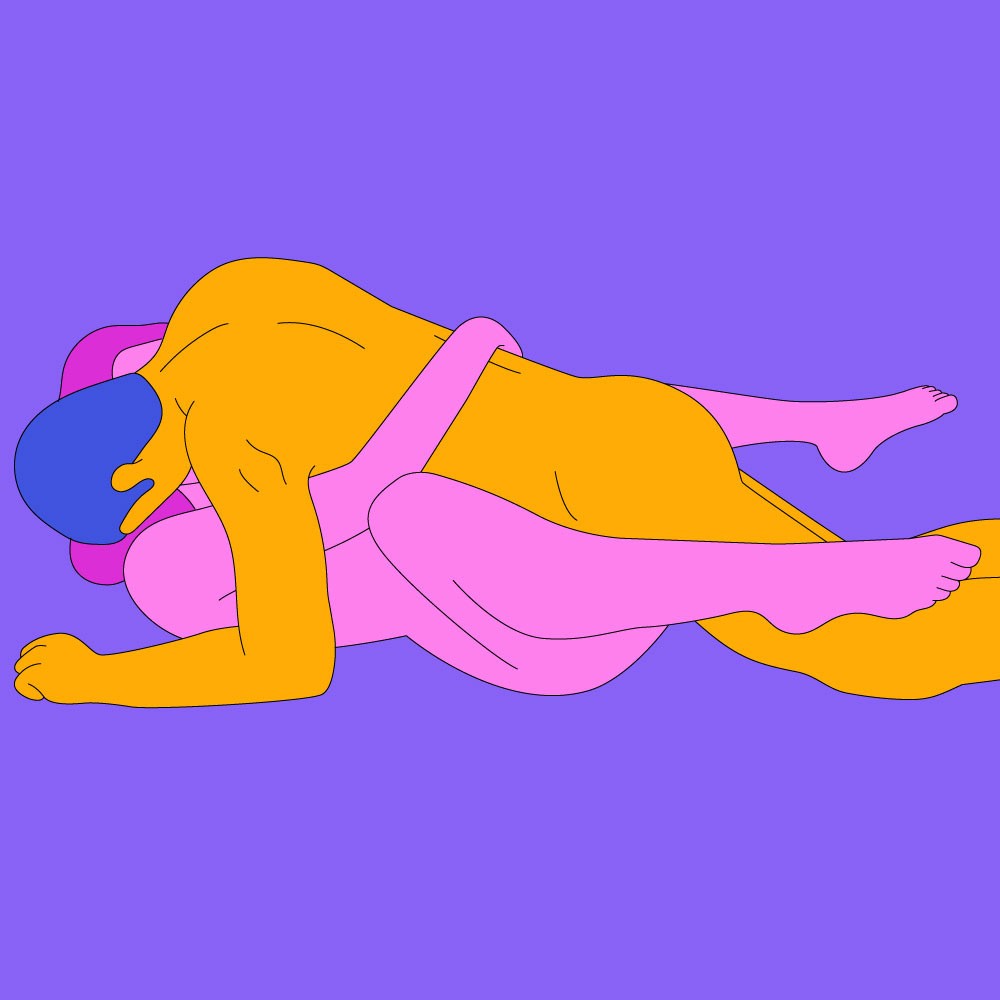
It’s a classic for a reason! If you need a refresher, Missionary position is when the receiving partner lies on their back with the penetrating on top of them. Since you’re directly facing your partner, it can feel more intimate and on a practical level may make communication easier.
For even easier G-spot stimulation, try raising your knees or legs or using a pillow to shift your pelvis upwards. Just know that your partner will definitely be in the splash zone!
Speedbump

Don’t be put off by its name; the Speedbump position can facilitate squirting, not slow it down. For this position, the receiving partner lies face down with their pelvis propped up with a pillow, ideally a wedge-shaped one.
The penetrating partner gets on their hands and knees and enters from behind, similar to Doggy Style. The angle, proximity, and pillow support all help to relax the pelvic floor and more easily stimulate the G-spot, making it easier to squirt.
Reverse Cowgirl
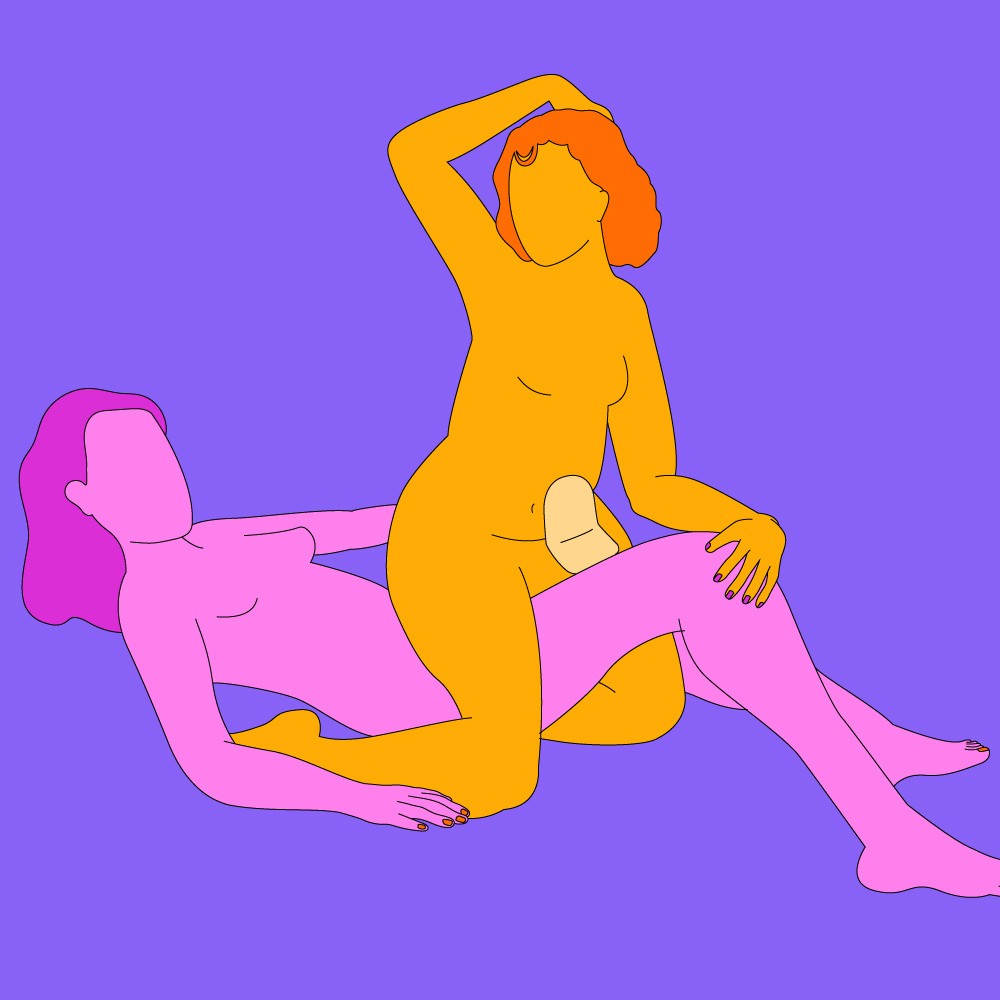
One of the most well-known female on top sex positions, Reverse Cowgirl (or Reverse Cowpoke, if you want to get gender neutral with it) involves the penetrative partner laying face up and the receiving partner sitting on top of them, facing the opposite direction.
Here, it’s easier for the receiving partner to control the angle, timing, and intensity of the thrusts, which is extra important if you know exactly what you need in order to squirt. It’s also much easier to use a vibrator on your clit.
You’ve already learned a lot about squirting, but you may still have some questions and maybe even some concerns. There’s a lot of misinformation swirling around, so we’ve tried to set the record straight on all things squirt.
“It’s just pee” or “It’s not pee at all”
The debate has raged for years: Is squirt pee? Squirt and pee aren’t interchangeable, but squirt does come from the bladder which is famously where pee lives. Urine “can be released during sexual stimulation,” say Javay, “especially if you do not empty your bladder beforehand.” This is especially true with squirting, since squirt fluid travels through the urethra. It’s natural; don’t judge yourself if it happens.
“Squirting is the same as female ejaculation”
Squirting and female ejaculation were considered the same thing until quite recently. But there is a difference, according to a Clinical Anatomy review of the current research. It defines squirting as “a transurethral expulsion of approximately 10 milliliters or more of transparent fluid” and female ejaculation as “a secretion of a few milliliters of thick fluid” with “a high concentration of prostate-specific antigen.” However, because this distinction isn’t widely known, Javay acknowledges that “the phrase female ejaculation and its use change depending on who is speaking and the culture.”
“Squirting isn’t real”
If you’re a squirt skeptic, let our sex educator put your doubts at ease: “Squirting is real, though it doesn't necessarily look like it does in porn,” Javay says. The “far-shooting streams of squirt” you see in adult films are often real, but they’re achieved by skilled professionals who have squirting down to a science. (And yes, in some porn scenes it’s pee or water from a douche, but don’t let a few fake squirts turn you into a non-believer.)
“Everyone with a vulva should be able to squirt”
“Nearly 60% of people with vulvas haven't ever or aren't able to squirt,” Javay notes. That doesn’t mean those people will never, ever squirt, just that they haven’t yet. Plus, not everyone knows that squirting often takes a concerted effort and specific techniques.
Squirting can be a lovely time, but if it starts to feel like a project, remember that sex without it is great too! “If you can't squirt, you are not missing out,” Javay says, “especially since you don't have to worry about continuously changing your bedding every time you have an orgasm.”
“Squirting is a sign of a mind-blowing orgasm”
Only 20% of squirters “always experienced squirting and orgasm together,” so if you’re not cumming and squirting in perfect harmony, that’s actually completely normal. As long as you’re having a good time, you’re doing it right — even if you don’t end up squirting at all. “I wouldn’t equate squirting with better sex,” says Lovehoney Forum user MyDeviantVirtue. “Sometimes, I have a better orgasm without squirting then[sic] if I do.”


